



Pasted content
FleetCore v1.0.0
Vehicle Management, Maintenance & Simulation for LSPDFR
Created & Developed by LaVante Pettigrew
FleetCore changes the way vehicles work during an LSPDFR patrol.
Instead of treating every police vehicle as a disposable GTA vehicle that is effectively brand new every time you spawn it, FleetCore gives vehicles their own condition, mileage, maintenance needs, mechanical systems, service history, damage consequences, fuel use, environmental exposure, and operational history.
Your car matters now. DON'T WRECK IT.
Drive it hard, and components wear. Neglect maintenance, and problems can develop. Damage the vehicle, and that damage can affect other systems. Maintain it properly, and the vehicle can remain in service across multiple tours of duty.
FleetCore is designed for players who want the patrol vehicle itself to become part of the simulation.
FleetCore was developed around my custom Florida-based LSPDFR build, but FleetCore itself is agency- and vehicle-pack independent. You do not need a Florida build to use it.
Vehicle Systems
FleetCore currently simulates:
Battery and charging system
Alternator
Starter
Cooling system
Radiator
Water pump
Thermostat
Engine oil
Transmission fluid
Brake fluid and brake hydraulics
Washer fluid
Timing system
Air conditioning
Tires and individual tire pressure
Spare tire
Suspension
Fuel system
Fuel pump, filter, tank, and lines
Vehicle mileage
Vehicle inventory
Vehicle damage
Fluid leaks
Burnout-related tire wear
Terrain-related wear
Weather and environmental influence
These aren't intended to simply operate as isolated status bars.
FleetCore's systems interact with the vehicle and with each other. A cooling-system problem can lead to overheating. Poor lubrication can damage the engine. Low tire pressure can accelerate tire wear. Suspension condition can influence tire stress. Fuel-system failures can affect fuel delivery. Electrical condition can determine whether the vehicle continues operating or starts at all.
The goal isn't just to tell you that something is wrong.
Mechanical condition has consequences.
If you neglect the vehicle long enough, there may come a point where you're not driving back to the station.
You're calling a tow truck.
Persistent Vehicles
FleetCore remembers your vehicles.
Vehicle state is written to persistent data so mileage, mechanical condition, maintenance information, fuel state, and other FleetCore information can survive a complete GTA V restart.
This allows the same patrol vehicle to develop over time instead of effectively becoming a brand-new car every time you launch the game.
FleetCore also maintains individual vehicle histories so your patrol cars can develop actual operational and maintenance records.
FleetCore v1.0.0 also includes persistence safeguards. FleetCore maintains backup/recovery information for important vehicle and history data so an unreadable persistence file is less likely to result in the loss of an entire fleet record.
Vehicle Profiles
FleetCore supports configurable vehicle profiles.
The included:
VehicleProfiles.json
allows individual vehicles to be assigned information such as:
Display Name
Vehicle Role
Fuel Tank Capacity
Service Profile
This is especially useful for addon police vehicles.
Instead of FleetCore knowing your car only as a spawn code, you can tell FleetCore what that vehicle actually represents in your fleet.
Build & Vehicle Pack Flexibility
I developed and extensively tested FleetCore using a dedicated Florida-centered LSPDFR build with custom law-enforcement vehicles and agency-specific vehicle roles.
You do NOT need my Florida build to use FleetCore.
FleetCore is designed to work independently of any particular state, agency, department, or vehicle pack.
The vehicle profiles included with FleetCore can be customized to fit your own setup.
You can change vehicle identities, operational roles, fuel capacities, and applicable service profiles to represent the vehicles in your fleet.
Example vehicle roles can include:
Patrol
Traffic Enforcement
Pursuit Intervention
Criminal Interdiction
Unmarked / Ghosted Enforcement
Patrol / Utility
You are not required to use the roles or vehicle identities from my Florida build.
Change them.
Build your own fleet.
FleetCore will use the configured vehicle profile and respond according to the characteristics and service configuration you've assigned to that vehicle.
That means FleetCore can be adapted for a highway patrol/state police setup, municipal police department, sheriff's office, federal fleet, fictional department, or an entirely custom LSPDFR build.
Your fleet. Your rules. Your simulation.
Tour of Duty & Reporting
FleetCore doesn't only maintain the vehicle mechanically. It can also keep track of what that vehicle has been doing.
FleetCore can track vehicle activity across a tour of duty.
Vehicle History records relevant FleetCore events, while the reporting system can generate and archive tour/shift reports for later review.
This allows your vehicle to build an operational record alongside its mechanical history.
It also establishes the foundation for future MDT and report-management integrations without requiring those external systems for FleetCore itself to operate.
FleetCore Control Center
Press:
F1
to open the FleetCore Control Center.
The Control Center gives you access to FleetCore's management interface, including areas for:
Vehicle information
Vehicle history
Reports
Settings
System status
FleetCore management functions
This is the central place for managing and reviewing FleetCore during gameplay.
Vehicle Monitor & Diagnostics
Press:
F10
to toggle FleetCore's diagnostic/detail display.
The FleetCore Vehicle Monitor provides information about the vehicle during gameplay and can display additional information when abnormal vehicle conditions are detected.
You don't have to constantly stare at a maintenance menu to know something is going wrong with your car.
Fuel & Roadside Functions
FleetCore includes fuel-station and roadside functionality.
Default interaction controls include:
G — Refuel at a FleetCore fuel station
Q — Use jumpbox
R — Use emergency fuel can
N — Install spare tire
H — Inflate selected tire
Fuel-station interaction may require the vehicle to be stopped with the engine turned off.
FleetCore also includes roadside-support functionality intended to give you options when something happens away from the station.
Sometimes you can get the vehicle going again.
Sometimes you can't.
First Launch & Onboarding
The first time FleetCore successfully loads, you'll receive a dedicated onboarding screen explaining what FleetCore is and how the system works.
Once you acknowledge it, FleetCore remembers that you've completed onboarding and won't display the full introduction every time you start the game.
Normal launches display:
FleetCore loaded successfully
Created by LaVante Pettigrew
Your car matters now. DON'T WRECK IT.
If you ever want to see the introduction again, the onboarding state can be reset through FleetCore.
Developer Mode
FleetCore contains extensive diagnostic functionality that I used while building and testing the individual mechanical systems.
Developer Mode is OFF by default in the public release.
When enabled, the configured development controls allow individual systems to be damaged, depleted, serviced, or repaired for testing.
Developer Mode is primarily intended for:
Troubleshooting
Testing
Bug reproduction
Development
You shouldn't need Developer Mode enabled for normal patrol gameplay.
Configuration
FleetCore's main configuration file is located at:
plugins\LSPDFR\FleetCore\FleetCore.ini
Additional FleetCore configuration/data files include:
VehicleProfiles.json
FuelStations.json
RoadsideStations.json
FleetCore's configuration provides control over individual simulation systems, thresholds, wear rates, fuel behavior, damage behavior, dashboard behavior, notifications, vehicle exclusions, developer controls, and other FleetCore functionality.
Major systems can also be individually enabled or disabled.
The public release ships with the main simulation systems enabled and:
DebugMode=False
Developer Mode can be enabled later if you need it.
Installation
FleetCore requires an existing working installation of:
Grand Theft Auto V
RAGE Plugin Hook
LSPDFR
To install FleetCore, copy the included:
plugins
folder into your main Grand Theft Auto V directory.
Your resulting installation should look like:
Grand Theft Auto V
└── plugins
    └── LSPDFR
        ├── FleetCore.dll
        └── FleetCore
            ├── FleetCore.ini
            ├── FuelStations.json
            ├── RoadsideStations.json
            └── VehicleProfiles.json
You do not need to manually create vehicle histories, reports, or persistent vehicle databases.
FleetCore creates its operational data as needed:
FleetCore\Data
FleetCore\History
FleetCore\Reports
Release Notice
FleetCore v1.0.0 is the initial public release.
Before release, FleetCore's core systems went through:
Development testing
Cold-start testing
Persistence testing
Edge-case and abuse testing
Extended real-patrol stress testing
Release-safety hardening
Clean-install testing
That doesn't mean there won't be bugs.
FleetCore interacts with a lot of different parts of a vehicle over potentially very long gameplay sessions. Different vehicle packs, plugin combinations, configurations, and unusual gameplay situations may expose something I didn't encounter while developing it.
If something breaks or you encounter a weird bug, please leave a comment in the comments section of the FleetCore LSPDFR page.
If possible, include:
What happened

What vehicle you were using

What you were doing immediately before the problem

Whether you can make it happen again

Relevant RagePluginHook.log information

Other vehicle/gameplay plugins that may be involved
The more information I have, the easier it will be to reproduce and fix the problem.
Known Limitations — v1.0.0
Garage & Service Facilities
FleetCore currently tracks vehicle condition, maintenance requirements, service history, component wear, and mechanical failures, but the planned physical FleetCore garage/service facility system is not included in v1.0.0.
At the moment, FleetCore does not provide dedicated map-based garages where you can pull a vehicle into a service bay and perform individual maintenance or repairs through a garage interface.
That system is planned for future development.
The existing maintenance simulation and persistent service information are intended to eventually form the foundation for that system.
External MDT Filing
External MDT filing is not currently implemented.
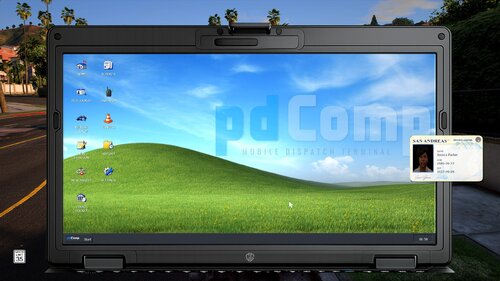
I've reserved architecture inside FleetCore for possible future integration with systems such as Nexus MDT and pdComp, but FleetCore does not currently require or claim integration with either project.
Any integration with another creator's plugin will depend on what integration methods are available and obtaining any necessary permission or cooperation from that creator.
Spoken 10-41 / 10-42
FleetCore does not currently perform its own microphone speech recognition for spoken radio phrases such as 10-41 and 10-42.
External dispatch/duty integration is something I may explore later rather than adding another independent voice-recognition system to FleetCore.
Planned Updates & Future Development
FleetCore v1.0.0 is the beginning, not the end.
The core vehicle simulation is built, but there are several areas I want to continue developing as FleetCore grows.
FleetCore Garages & Vehicle Service
One of the major systems planned for FleetCore is a dedicated garage and vehicle-service system.
The goal is to eventually give FleetCore physical service locations where vehicles can be brought for maintenance and repairs rather than treating maintenance entirely as a background or management function.
Planned concepts include:
Dedicated FleetCore garage/service locations
Bringing individual persistent fleet vehicles in for service
Oil and fluid service
Tire replacement and repair
Brake service
Cooling-system repairs
Battery and electrical service
Engine and transmission repairs
Component replacement
Maintenance inspections
Vehicle condition and service records
Vehicles being placed out of service for major repairs
Additional fleet-management functionality through the Control Center
The important part is that this isn't intended to become a completely separate garage script.
The garage system is planned to connect directly with FleetCore's existing persistent vehicle architecture.
The vehicle you bring into the garage would be the same vehicle FleetCore has already been tracking—with its own mileage, mechanical condition, damage, maintenance history, fuel state, and operational history.
In other words:
FleetCore detects maintenance need
        ↓
Vehicle develops an actual service requirement
        ↓
Bring that persistent vehicle to a FleetCore garage
        ↓
Select/perform the necessary maintenance or repair
        ↓
Vehicle condition changes
        ↓
Service is recorded in that vehicle's history
        ↓
Vehicle returns to service
That's the direction I want the maintenance side of FleetCore to eventually take.
Nexus MDT Integration
One of the integrations I want to explore is allowing FleetCore information to interact with Nexus MDT.
That could eventually include things such as:
Vehicle histories
Maintenance information
Fleet records
Tour reports
Vehicle data
This will depend on what integration support is available and permission/cooperation from the Nexus MDT creator.
pdComp Integration
I also want to explore similar integration possibilities with pdComp.
The goal would be to make FleetCore's vehicle information and reporting feel like part of the larger police-computer environment instead of requiring every FleetCore record to exist completely separately.
Again, this depends on available integration support and permission from the creator.
Dispatch & Duty Integration
Future development may explore ways for external dispatch systems to communicate duty states directly with FleetCore.
For example:
Officer goes 10-41
        ↓
Dispatch system recognizes it
        ↓
FleetCore begins the tour

Officer goes 10-42
        ↓
Dispatch system recognizes it
        ↓
FleetCore closes the tour
        ↓
Shift report generated
Rather than FleetCore implementing another standalone speech-recognition system, the goal would be to work with existing systems where possible.
Continued Mechanical Simulation
FleetCore's mechanical simulation will continue to be refined.
Future updates may expand or improve:
Mechanical wear
Component failures
Maintenance behavior
Vehicle damage
Fluid behavior
Service requirements
Environmental effects
Fleet management
Interactions between existing systems
The existing systems are not intended to remain frozen just because they're functional in v1.0.0.
Feedback will help determine where additional balancing, configuration, or mechanical depth is needed.
Vehicle Profile Expansion
I also plan to continue improving the vehicle-profile system.
The goal is to make FleetCore increasingly easy to adapt to different:
Police departments
Sheriff's offices
Highway patrol/state police agencies
Federal agencies
Vehicle packs
Fictional departments
Specialized units
Your LSPDFR build does not have to look like mine.
FleetCore Control Center Improvements
The F1 Control Center will continue to grow as FleetCore develops.
Future updates may expand the information, configuration, history, reporting, maintenance, and fleet-management tools available through the interface.
The future garage/service system can also eventually give the Control Center a larger role in managing vehicle condition and service information.
Community Feedback
A major part of development after v1.0.0 will come from actually seeing FleetCore operate in builds other than my own.
Community feedback will help identify:
Bugs
Compatibility issues
Balancing problems
Mechanical behaviors that need adjustment
Vehicle-pack differences
Features that need additional configuration
Quality-of-life improvements
If FleetCore behaves differently in your setup than it does in mine, I want to know about it.
Important
Planned features are not guaranteed for a particular version or timeframe.
Some future features—especially external plugin integrations—depend on what other plugin creators make available and whether the necessary integration access or permission can be obtained.
I would rather release an integration when it works correctly than promise something I can't properly implement.
Changelog
v1.0.0 — Initial Public Release
Initial public release of FleetCore.
Includes:
Persistent vehicle simulation
Interconnected mechanical systems
Battery, alternator, and starting simulation
Cooling and overheating
Engine and transmission systems
Multiple vehicle-fluid systems
Tires and suspension
Fuel consumption and refueling
Fuel-system components
Roadside equipment
Terrain and weather influence
Fluid leaks
Burnout-related wear
Vehicle mileage
Vehicle inventory
Vehicle identity profiles
Configurable vehicle roles
Vehicle service profiles
Vehicle history
Tour-of-duty tracking
Shift-report generation and archiving
FleetCore Control Center
Diagnostic Vehicle Monitor
First-run onboarding
Startup branding
Configurable simulation behavior
Persistent vehicle data
Persistence backup/recovery safeguards
Vehicle-history backup/recovery safeguards
Developer Mode
Clean-install support
Planned, but not included in v1.0.0
Physical FleetCore garages/service facilities
Full garage-based maintenance and repair workflow
Nexus MDT integration
pdComp integration
External dispatch/duty-state integration
Credits
Created & Developed by LaVante Pettigrew
FleetCore was designed, developed, and tested from the ground up as a vehicle simulation and management system for LSPDFR.
Special thanks to the LSPDFR community and the creators whose work helped make the build FleetCore was developed and tested with possible.
Thank you to everyone who downloads, tests, reports bugs, and helps FleetCore continue to grow.
FleetCore v1.0.0
Created by LaVante Pettigrew
Mechanical realism. Operational depth. Persistent progression.
Your car matters now. DON'T WRECK IT.
Short Description
AI disclosure
The author has disclosed that AI tools were used in creating the following aspects of this file:
- Description
- Images
- Mod and Mod Content (Substantial)
I am a newbie at coding and i did not want to screw up at all
FleetCore was designed, developed, and tested from the ground up as a vehicle simulation and management system for LSPDFR.
Thank you to everyone who downloads, tests, reports bugs, and helps FleetCore continue to grow.




.thumb.png.fc8bcf4c49efb0f46604702b368d2431.png)


![[ELS/Replace] 2021 Paris, Tx Police Department Ford Explorer](http://s3-screenshots.int-cdn.lcpdfrusercontent.com/resize/500/-/monthly_2026_08/parispd.thumb.jpg.174da4c50fac0a6f1f3f10748f2646a1.jpg)
![[ELS/Replace] 2021 Paris, Tx Police Department Dodge Charger](http://s3-screenshots.int-cdn.lcpdfrusercontent.com/resize/500/-/monthly_2026_08/parispd.thumb.jpg.f0b4bdf302c4fc91cec9e48ea4159a53.jpg)



Recommended Comments
Create an account or sign in to comment