cp702
Friends of LSPDFR
-
Joined
Everything posted by cp702
-
This is simply false; the API is there for a reason, which is that we now do support script integration. What LCPDFR does *not* do is go very far out of its way to support scripts that worked with older versions. Those scripts relied on LCPDFR acting a certain way and doing certain things; that's changed now, and because the scripts don't integrate, they can't all handle the change. The only catch is that scripts have to be written to use the API, and old scripts aren't necessarily being rewritten.
-
I remember asking LMS about this, and IIRC, he said it's pretty hard to get the SFX volume from a script. It might be better to just keep SFX on full volume, and decrease volume through Windows (either your whole computer's volume, or GTA's volume [to do that, click on the volume icon on the taskbar while GTA is running, click on "Mixer", and then adjust GTA's volume slider; not sure if it works, but it probably should work to decrease LCPDFR's volume]). Enhanced MP support is something we plan on adding. Please don't both make a topic with a suggestion AND post it here. Pick one or the other. Since you picked "make a topic", I'm hiding your post here.
-
The story as reported there is misleading. The couple involved was not forcing a church to perform a marriage. They sought to perform their *civil union* ceremony on land which a church owned and held out as open to the public. At no point were any members of the church asked to participate in the wedding; the area involved was church land, but was held out as being open to general use. The tax consequence was that they couldn't then claim that land as tax-exempt under a state program allowing open space open to the general public to be exempt from property tax. There's a world of difference between "your church needs to perform this ceremony" and "land you claim property tax exemption on because it's open to the public must be available to said public in a non-discriminatory fashion." Likewise, non-church functions aren't necessarily exempt from having to *recognize* a gay marriage; no one has to *perform* one (except for government officials, who could reasonably be bound by their job to be non-discriminatory).
-
How did the "OMG people will force churches to marry gay couples when they don't want to" meme actually start? Because it isn't true, at least not in the US. In fact, it cannot ever be made the case in the US without a constitutional amendment explicitly saying so; the free exercise clause guarantees a church's total discretion in who to marry. For example, a church that refuses to marry interracial couples faces no legal consequences whatsoever. You don't have to go to a church to get married. Marriage for civil purposes can be performed by civil authority. However, I don't see the point of having "civil unions". As far as I'm concerned, it's drawing a distinction without any reason to do so. What it basically says is "Oh, you're not really married. Your relationship isn't up to 'marriage' levels. The government is just giving you the privileges of a married couple, but you have something different." In context, "different" tends to mean or imply "lesser". The argument that the term "marriage" can't change in meaning goes against the whole history of language; a gay couple is more likely to describe themselves as "married" than "civilly united". I don't see why the government should draw arbitrary distinctions in language; if two things have different names, it implies they're treated differently, and often leads to that outcome. @c13 - And yet, married couples who are infertile have the same tax benefits. So do those who never intend on having children. Stable relationships are useful to society per se; people in stable relationships tend to stay in their community longer and be more connected to it, can often support each other if one falls on hard times, etc.
-
MODERATOR NOTICE Topic moved.
-
Maybe have an event fired to all plugins when a callout is accepted, giving the namespace and class name of the callout? I think it should be general-purpose, not distinguishing between vanilla and user-made (though if the namespace for builtins is something obfusucated, maybe have them *report* a namespace of G17 or LCPDFR, regardless of what their *actual* namespace is).
-
The cop, um, was a highway patrolman. Ultimately, traffic control on the highway is his responsibility, not that of a fire crew.
-
Let's broaden it - can you detect when a callout is accepted, period? (the pre-made callouts are, AFAIK, coded with essentially the same tools available to you, and aren't specially privileged besides being physically located in the main DLL).
-
Did you ask chasez about his Harley? They may use similar components, so if you talked to him, you might be able to get somewhere.
-
Not always. Here's the thing: If you say something about state law or government that is *not* required by federal law, and you say it applies to all states, you're wrong. Some states (from quick reading, Ohio is among them) give highway patrol extremely limited power off state property - the OSHP seems to be unable to arrest on private property except during hot pursuit and riots. OTOH, in California, any peace officer has statewide jurisdiction - a cop from a small town in the middle of nowhere can technically go to downtown Los Angeles and have just as much authority as in his hometown. Railroad police are in fact their own category; they generally have authority on railroad property in every state the railroad operates. Sometimes, this is government-run (Amtrak Police, commuter rail police forces), sometimes private (Union Pacific police, who were actually a model used when the FBI was set up). Especially if government-run, they might get full law-enforcement authority in the jurisdictions the railroad operates in, instead of just on the property (the DC Metro Transit Police have authority in parts of *3* states-or-state-like-entities-because-DC-isn't-actually-a-state-but-close-enough). Also, any notion that one kind of cop is "the best" implies a hierarchy that *does not exist* - the highway patrol/state police aren't necessary the "elite" that every cop aspires to, just as SWAT teams aren't. It's a separate agency; it may have a better reputation than a local agency, but that depends on the agencies, and isn't inherent in state/local distinction. State agencies tend to have a much greater focus on doing traffic, because interstates are almost always under their primary jurisdiction - a cop who wants to keep their city safe would be advised not to join the state police, because that's generally not what they do.
-
The LAPD is pretty small, proportionally. New York has a bit under 1 cop per 200 people, while LA has a bit more than 1 cop per 400 (I think the actual numbers are ~230 and ~380).
-
I have the sense most officers are in police departments, because most of the largest agencies are police agencies (2 reasons: 1, they're in big cities, and 2, police tend to be more associated with a civil-service system than sheriffs, and play better with the mayor's policies (since the chiefs are appointed, not elected)). However, which one an individual would want to join would depend on a lot of things, many of which are not specific to policing but instead affect every job (pay/benefits, culture, size, etc.) Sheriffs' offices tend to be older, because they're formed when the *county* is formed, and not when the *city* is formed (also, it lines up more with historical law enforcement; the notion of a professional police department is newer than you'd think, while a sheriff is just "this guy enforces the law, and if he needs help, deputizes others to help"). You also often can lateral between different types of agency; it's not that unusual for a police officer to transfer to a sheriff's office, or a state trooper to become a local cop: police, sheriff, and state police don't work in different fields, and for lateral hiring purposes, tend to be treated identically. All are generally sworn peace officers, and that matters more.Also, the simulator has the advantage of not being mandatory, letting you only do it when you want to. You aren't required to join the military to play a sim of an F-16 (well, not a *commercial* sim), and you don't run the risk of actual death.This is not necessarily the case. For instance, Connecticut has counties, but has no county governments - the counties are used for certain state government divisions (like courts), but there are no sheriffs because there are no county governments. Other places, a city might be independent of any county (Baltimore, every incorporated city in Virginia), or might have merged with its county (Las Vegas), or might include *several* counties (NYC, whose boroughs are technically all counties). If it's a consolidated city-county, the police and sheriff might have merged (e.g. Las Vegas, which has a police department headed by an elected sheriff), or the sheriff might just handle the courts (Philadelphia). Independent cities tend to have their own sheriffs. Washington DC has the US Marshals instead, because it's government situation is weird (that's the technical term). Other places (Rhode Island, Connecticut, and Massachusetts, as well as all but the sparsest areas of New Hampshire, Vermont, and Maine), there are no unincorporated areas - every inch of land is in an incorporated town. County government, even when it exists, doesn't tend to do much in New England. Sheriffs don't patrol in these places, because town police patrol instead. There are also counties with a county police force in addition to a sheriff. Here, too, the sheriff doesn't handle patrol anymore - it is passed off to the county police. The main duties that reliably fall to a sheriff are process serving and enforcing civil orders and judgments, running a county jail, providing court security, providing inmate transport, and generally serving as the enforcement wing of the courts. (even then, NYC's sheriff doesn't do that - they just enforce civil judgments in favor of the city, collecting the money the city is owed). In most places, the sheriff provides full-service law enforcement, but it's certainly not everywhere. When there's a police department or a patchwork of departments covering the whole county, their role tends to be restricted to the court system. They also are typically but not always elected - Hawaii has a statewide unelected sheriff, as does Rhode Island. NYC's sheriff is appointed by the mayor.And some might actually arrest you. It all depends on the officer, the day they're having, how you act towards them, if they have suspicions about you...
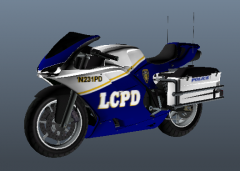 I dunno, I like the swooshy livery on the aerodymanic bike.Off-duty officers carry guns CONCEALED. I have no issues with concealed firearms. I have an issue with openly carried firearms. Open carry is worse for self-defense than concealed carry, so someone carrying openly is generally someone who wants to show off their gun. That's near the bottom of my list of people I want to have guns - someone who's concerned about the "cool factor" of carry or who isn't willing to endure the discomfort of a concealed weapon is less likely to have the right attitude towards firearms. If someone's carrying for work-related reasons and is *expected to be carrying*, concealed carry offers no benefit - this applies to, e.g., gun store employees. Bank tellers shouldn't be armed openly, because that ruins the effectiveness of their weapons - openly displayed firearms lose any element of surprise, and a robber could just shoot any teller going for an openly displayed gun. (also, I highly doubt bank tellers are *ever* armed by the store, because it would send insurance through the roof - a teller is supposed to comply with the demands of a robber and give them the money while calling the cops, because there's no sense risking the teller's life over the insured money in the bank).I don't mind concealed carry, but I agree with Darkangel. The issue with open carry is that it can add an intimidation factor. It also blurs the line between "brandishing a weapon" and just carrying it; this can cut both ways: innocent actions can look incredibly intimidating, while it's harder to draw the legal line to prevent people from ACTUALLY intimidating someone. If someone needs a firearm for their job (police, military, security, etc.), and especially is wearing some sort of uniform associated with that job (so I can instantly see that yes, they're at work), it makes it less intimidating. I'm much less likely to be worried about a uniformed security guard with a weapon than a person in street clothes with a gun strapped to them - the first is clearly carrying it for work, the second probably for whatever reason WANTS people to see that they're armed. I get nervous around someone who wants to show off a gun. Open carry is worse for self-defense; it makes you the first target for a shooter, and makes your gun a potential theft target. Police, security, and military carry openly because they're expected to carry, so concealment offers no benefits and slowed draw times matter more. Hunters are again obviously armed, and their motive for carrying openly is more "I have a big gun and am using it for hunting; concealing is less comfortable, and is stupid for me, because animals don't care if a gun is concealed". But if someone who isn't obviously armed wants everyone to know they're armed, I'm automatically sort of nervous around them.Try manually toggling the extras with SNT. Do the textures appear? They may not light up, but do the emis textures appear? (it might be easiest if you make them light purple or something similar that will stand out even if not lit up)What is the power draw of your computer at max draw?@Monarchco: That's not true. Penalty increases cannot affect any case in which the crime has already occurred. It doesn't matter if the case is still active or if no sentence has yet been handed down; the government cannot, no matter what, apply punishments retroactively. There are cases where they can add restrictions on people who have already committed crimes, because that's considered regulatory and not punitive (e.g. even if you committed domestic violence before the Lautenburg amendment was passed, it still prohibits you from owning a firearm), but death sentences are punitive. It's actually never been legal in the US to apply punishments retroactively; this is one of the very very few areas in which the main body of the Constitution explicitly prohibits states from doing something (almost all of the Constitutional restrictions on states are in the 14th Amendment and later, post-Civil War; the ban on ex post facto laws has been around since before the Bill of Rights was even passed).Mr. Quiggles is right. And even if a state sees a horrific crime and wants to reinstate the death penalty because of it, that state cannot apply the death penalty to the crime in question. It is illegal, full stop, to apply criminal penalties retroactively. You can only be tried under the law in effect at the time of the crime, and you cannot be sentenced to a higher penalty than was allowed for that crime when the crime itself happened. New crimes and increases in penalties only apply to future behavior; they have no impact on anything that happened before they were passed (OTOH, if a formerly criminal act is legalized or penalties are decreased, they *are* allowed to apply *that* retroactively; the "no retroactive law" only applies to laws that increase punishments). If the government *is* allowed to apply the law retroactively, or make an exception from general laws for one person, nobody is safe.GM's sales materials disagree: both Caprice and Impala Police Patrol Cars are option 9C1 (the Impala also has a 9C3 version, which is undercover; their non-sedans use different option codes).But 9C1 *doesn't* mean the Impala. It means "Chevy police package sedan". The Caprice police version is ALSO package 9C1. If you use it, you aren't distinguishing between Impala and Caprice. I'm talking about *current cars* here; GM simultaneously sells Impala 9C1s and Caprice 9C1s. Unless you mean for specifically the 90s Caprice? Because that's still kinda confusing, since 9C1 doesn't suffice to describe it.