

lovkal
Members
-
Joined
-
Last visited
Everything posted by lovkal
-
Look around on PCPartPicker. They've got a bunch of computer builds that you can pick from, you can sort by price and all that, too.
-
Whelen Liberty with tinted LEDs.
-
It will. They would have told the community otherwise.
-
-
Hi! First degree murder is when the murder is premeditated. Essentially, the prosecutor has to prove that you thought of committing the crime before it took place, through planning etc. Capital murder: More or less what you call "First degree murder" in states where the death penalty is legal. Felony murder is what you would charge a suspect with if he/she killed someone while committing another crime such as a robbery. If the intent was not to kill during a mugging, for instance, you'll probably get charged with Felony murder, instead of 1st degree murder. However, it still counts as murder in the first degree. Second degree murder: A killing done impulsively without premeditation, but with "malice aforethought" A killing that results from an act intended to cause serious bodily harm A killing that results from an act that demonstrates the perpetrators "depraved indifference" to human life (Source) Here's an example: Say you come home to find your wife sleeping with another man and then you let him walk away. The next day, however, you see him driving past you on the street. You take out your gun and kill him, spontaneously. As we can see in this situation, there is no premeditation/planning involved, the crime was not committed in a "heat of passion", but it was intentional - making it a murder. You also recklessly fired your gun from the sidewalk at the car in the road, showing no regard for potential people behind the car, which proves your "depraved indifference to human life". Killing someone behind the target you intended to kill in this situation would also count as murder in the second degree. (There is also third degree murder, but it's only used in a few states so I won't explain it) This brings us to another common criminal charge which is Manslaughter. Voluntary manslaughter occurs when someone with no prior intent to kill, kills someone in a fit of rage or maybe because of a fight. Involuntary manslaughter is what you might get charged with if you kill someone by accident through reckless behavior. Moving on... An assault does not cause physical harm to the victim while battery does. If someone raises their fist towards you but misses and doesn't harm you, that person has committed an assault, but not battery. Battery requires an "offensive" or "harmful" physical touch. There's also simple assault vs. aggravated assault. An aggravated assault is an assault that someone commits with the intent of committing a more serious crime, such as rape. I believe Assault with a Deadly Weapon can count as both assault and battery, regardless if a victim was harmed or not. It makes no difference if someone threatens you with a golf club or if someone hits you with it - same criminal charge. A prosecutor just has to prove that the weapon was capable of causing death. DISCLAIMER: I'm not a lawyer, don't use my definitions for your real-life criminal defense.
-
We are already half-way through January, not long now. Stay strong, officer!
-
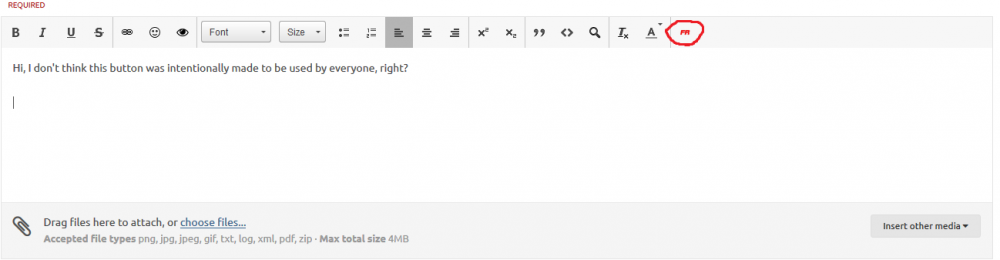
Hi, I don't think this button was intentionally made to be used by everyone, right?
-
This might be the first time the LSPDFR/LCPDFR team has ever announced a release date! Superb work as always, guys!
-
Maybe it said in the original post, there are two pictures my browser won't load for some reason..
-
What was the limit at before?
-
No, I wouldn't think so. If the mod is activated, the police will never chase you since you can't get a wanted level. When the mod isn't active, the police will behave normally. I believe Realism Dispatch Enhanced includes improvements to the police AI, why don't you try that out?
-
Yeah, I made that mistake as well, it happens to all Europeans probably heh. No problem and good luck!
-
They look good too! Two things about the flag, though; 1. on CPD cars the flag is just as tall as the blue line is, so it neatly covers that part of the line. 2. The stars on the American flag are always supposed to point forward, so if you've got a flag on the right-hand side of a car/uniform the stars should be in the right corner of the flag. As far as I know you never need to get permission if you want to make a skin for a car. As long as you give credit to the template/model creator when you release the skin it's fine. Check the README for your model before you take my word for it, however. Keep in mind that there are plenty of Crown Vic templates that have pretty much identical layouts, so a Crown Vic skin usually fits any Crown Vic model.
-
I think they look great even though they're your first! Personally, I don't really like the tilted blue lines, keep 'em straight. I think that you could draw a blue line straight until it reaches the front of the car, and then it can start tilting slightly downwards toward the headlight. The Sheriff's livery is my favorite, but I think that the black and yellow lines should keep going along the front of the car, instead of just having them stop at the department logo. I really like what you did with the "Sheriff" text on the rear of the car!
-
Realism Dispatch Enhanced fixes this and also revamps/adds to the game's emergency services.
-
That would be the FX-9370, then. But it's old and it's an AM3+ CPU which isn't known for handling gaming at 1080p well. Also, you'd have to pair it with a 1060 for best performance due to bottleneck. My opinion is that it would be worth investing more into a PC with brand new components than less into a short-term solution now that might not improve your situation that well.
-
Shoot. While reading your specs I just realized that you'd need an AM4 motherboard in order to get a Ryzen. Essentially you'd need to build a new computer from scratch. I don't know your budget but I would definitely recommend it. I threw this together but you can research and switch around parts however you like.
-
You don't have to open it up. Download Speccy and it'll tell you everything about your computer's specs. Except for power usage, which is what you can use PCPartPicker for.
-
PC Part Picker has a bunch of "recipes" for beginners. Here's their latest entry-level build for gaming which costs around $550. Tip: Garrys mod tends to lag a lot since it is 32-bit, by default. You can change it to 64-bit by right-clicking the game in Steam -> properties -> Betas -> 64-bit test build.
-
Hard to say, since I don't know what other stuff you have in your current build. Generally I'd say a 750W PSU is more than enough. PC Part Picker will tell you how much power you're gonna need. I tried adding the basic parts, a B350 mobo, the Ryzen 5 2600 and the 1070 TI which adds up to 269W. Well below 500W, but like I said, it doesn't account for whatever else you might have in your PC right now. Also, while looking for a PSU you're gonna see that they're ranked from Bronze to Platinum or something like that. Those levels are used for measuring energy efficiency in a PSU. For example, if you were to put a 'Bronze'-rated unit under 100% load, it would only give you 85% of those 500W. A 'Platinum'-rated would give you more during full load. Of course, this all depends on complex math and the voltage and what-not. If you're really interested, google '80 Plus', but otherwise this isn't something you should worry about unless you intend to overclock a lot or otherwise expose your PSU to heavier loads. EDIT: I think your 500W should be enough now that I think about it. Double-check in PC Part Picker anyhow 🙂 Yeah, unless the RAM slots aren't occupied by 4x2GB sticks you should be good. Find out how fast your RAM is. Ryzen works best with lots of fast RAM. I'm using G.Skill Ripjaws V - 16GB RAM clocked at 3100Mhz.
-
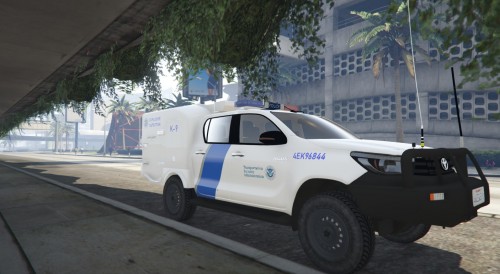 Those screenshots are way too low-res.
 -
I'd upgrade the PSU and get a GTX 1070Ti along with a Ryzen 5 2600 instead. Also, you should probably get more RAM, 16GB is the way to go nowadays. Virtually no bottleneck and great performance. Rough comparison between the new build and your current one However, if you insist on a GTX 1060, I'd switch out the CPU for the older FX-9370. Comparison The Ryzen 5 2600 is vastly better, though, and I would definitely say that a PSU upgrade is worth it! Ryzen 5 2600 vs. FX-9370 Note: I used the Bottleneck Calculator to try to find a good match regarding appropriate CPUs. Keep in mind that the site has been criticized for not being super accurate.
-
Vous devez installer LSPDFR avant d'installer Rage Plugin Hook. LSPDFR inclut une ancienne version de Rage Plugin Hook.
-
Edit the [ CONTROL ] section of your ELS.ini file. Here's a chart which translates the modification's key IDs to your actual keys: This can also be found within the ELS User Guide. EDIT: This can also be fixed by binding the Horn key to something else in GTA 5 controls.

-
Wasn't there a study which basically proved that most American police forces don't have strict enough firearm training? I believe it was so bad that the study even went so far to say that if sworn American officers would go through European gun training most of them wouldn't pass. I've been trying to find it with no luck, however.

.thumb.png.88abef5700c0586936b835aa02ad5f78.png)